Electrical safety inspection (VBF) for houses and flats
For a family home, our electrical safety inspection costs HUF 50,000–150,000 (final price; as a VAT-exempt small business we charge no VAT); we quote the exact price based on the floor area of the property; the call-out fee is not included and appears on a separate line. The price includes the on-site inspection, the measurements and the inspection certificate with a test report, ready within a few days, at most one week. We also inspect houses and flats wired by others, for example before a sale or letting, and we carry out lightning protection inspections as well.
How much does an electrical safety inspection cost in 2026?
For a family home the inspection costs HUF 50,000–150,000 (final price; as a VAT-exempt small business we charge no VAT). The price depends on the floor area and the location: once we know the floor area and the purpose, we give a fixed price in a quotation, with the call-out fee on a separate line. Our company is exempt from VAT, so private customers pay 0% VAT.
The price covers the visual inspection, protection and insulation measurements, testing of the residual current devices (RCDs) and the inspection certificate with the test report. Lightning protection inspection and the repair of any faults found are separate items.
When is an electrical safety inspection mandatory?
The rules are set by the Hungarian Electrical Safety Regulation, Decree 40/2017. (XII. 4.) NGM. For residential property, three situations are common:
| Situation | What the decree requires | Who orders it? |
|---|---|---|
| Sale, change of owner | an inspection is needed unless there is a certificate no older than 6 years | the operator, usually the seller, unless the contract says otherwise |
| Letting | an inspection is needed unless there is a certificate no older than 6 years | the operator, usually the landlord |
| Periodic inspection | residential buildings at least every 6 years; every 3 years if the flat is also a workplace | the operator |
For an owner-occupied flat that is not let, the periodic inspection may be omitted if both conditions are met: overcurrent protection of at most 32 A per phase, and the installation protected by an RCD of at most 30 mA. Older installations without RCDs do not qualify. More on RCDs in our article on RCD types.
What does the inspector check?
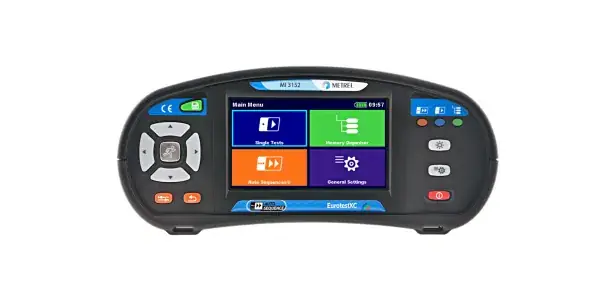
- Distribution board – breakers matched to cables, condition of connections, labelling.
- Shock protection – continuity of the protective conductor, loop impedance, earthing and equipotential bonding.
- Residual current devices (RCDs) – trip current and trip time, type and sensitivity.
- Insulation resistance – condition of cable insulation, circuit by circuit.
- Accessories and appliances – sockets, switches, lights, hard-wired appliances, bathroom zones.
The result is recorded in an inspection certificate with a test report. If there are defects, the certificate also sets the deadline for fixing them.
How does the inspection work?
- ArrangementWe ask for the floor area and the purpose (sale, letting, periodic inspection) and give a fixed price including the call-out.
- On-site inspectionVisual check and measurements on every circuit. There may be short power cuts during the inspection, so plan the day accordingly.
- CertificateThe certificate and the test report are delivered within a few days, at most one week, electronically and on paper if requested.
- Repair if neededIf the inspection finds faults, we give a separate quotation for the repair and re-test afterwards.
The inspection is carried out by our partner, a qualified electrical safety inspector. Repairs are done by our electricians to MSZ HD 60364 and handed over with a test report.
Do you also inspect lightning protection?
Yes. If the house has external lightning protection (a lightning rod), we issue a separate certificate and test report for it. The fee depends on the roof, the number of down conductors and earthing points, so we quote after a survey. Both inspections can be done on one visit.
What happens if the inspection finds faults?
The certificate lists the defects and the deadline for fixing them. We take on the repair on a separate quotation: typically fitting RCDs, replacing the board, adding a missing protective conductor or bonding, replacing damaged accessories. For major defects, for example old aluminium wiring, rewiring may be the better option. If an EV charger or heat pump is planned, we also check whether a capacity upgrade is needed.
Related articles from our knowledge base
Escape and exit-sign lighting, the Hungarian fire code and standards, duration, periodic testing and the log.
Read →Initial verification, declaration of conformity, test reports, lightning protection and the as-built drawing under the Hungarian VMBSZ.
Read →Frequently asked questions
How much does an electrical safety inspection cost?
HUF 50,000–150,000 for a family home (final price, no VAT). The exact price depends on the floor area; we quote it on request; the call-out fee is not included and appears on a separate line. Private customers pay 0% VAT, as our company is VAT-exempt.
Is the inspection mandatory when selling a flat?
Yes, unless there is a certificate no older than 6 years. Under Decree 40/2017. (XII. 4.) NGM it is required on change of ownership and on letting.
How long is the certificate valid?
For a sale or letting, a certificate no older than 6 years is accepted. Periodic inspection of residential buildings is due at least every 6 years, every 3 years if the flat is also used as a workplace.
How soon do I get the report?
Within a few days, at most one week after the on-site inspection, we deliver the certificate and the test report.
What is the difference between a protection test and an electrical safety inspection?
A protection test measures the protective conductor, the earthing and the RCDs. An electrical safety inspection is broader: it assesses the condition of the entire installation and issues a certificate. Adverts often use the two terms interchangeably.
Do you inspect houses wired by others?
Yes. We inspect the electrical installation of any house or flat, even if we did not install it, for example before a sale or letting.
If faults are found, who repairs them?
We can, on a separate quotation, re-tested afterwards with a test report. You may also have the repair done by another electrician.
Let’s talk about your project.
Tell us what you are planning and we will get back to you within a few days.
Get in touch